The History of Mourning Jewellery
Mourning jewellery is jewellery created to honour memory, grief and remembrance. It has often been worn close to the body, allowing the wearer to carry a private emotional connection in a visible or hidden way.
Although mourning jewellery is historical, its themes still feel deeply relevant. Jewellery can hold memory. It can mark a loss, a relationship, a transformation or a period of life. It can become a small object of meaning that stays with us.
Mourning jewellery and memento mori
Mourning jewellery and memento mori jewellery are closely connected, though they are not exactly the same. Mourning jewellery often relates to a specific person or loss. Memento mori jewellery is broader: it reminds us of mortality itself.
The Curios Collection draws influence from Victorian memento mori traditions and explores the relationship between memory, nature and mortality.
Symbols in mourning jewellery
Historical mourning jewellery often used symbols to express grief, remembrance and impermanence. Skulls, bones, flowers, pearls, dark stones, hands, hearts and locks of hair could all carry meaning.
In contemporary jewellery, these symbols can be reinterpreted. A skull may represent mortality. A pearl may suggest tenderness or a tear. A bone may refer to structure, remains or the natural cycle of life. A flower may symbolise beauty, fragility and change.
These symbols are powerful because they allow jewellery to say something without being overly literal.
Why people still connect with mourning jewellery
People are still drawn to mourning jewellery because it gives form to feelings that can be difficult to explain. Grief, memory and mortality are not always easy to speak about, but objects can help us hold them.
This is why contemporary memento mori jewellery does not need to feel old-fashioned. It can be deeply personal, artistic and quietly beautiful.
My contemporary approach
My Curios Collection is inspired by memento mori traditions, natural history and curiosity cabinets. It features sterling silver jewellery inspired by ethically sourced bone castings and symbolic motifs.
My background in contemporary jewellery, visual arts and taxidermy has shaped this collection. Olivia Dryden holds a Bachelor of Visual Arts and Design, received a Helpmann Academy Fellowship, and undertook specialist taxidermy studies in London.
Each piece is made with respect for the original specimen. Rather than hiding mortality, the work invites a quieter kind of attention: to detail, to memory, to the body, to nature and to time.
Explore related pieces

The Magpie Skull with Baroque Pearl Necklace is a handcrafted sterling silver necklace made in Adelaide, South Australia by Olivia Dryden. It belongs to the Curios Collection, where natural history, memento mori symbolism and careful craftsmanship meet.
The design centres on a magpie skull form, recreated in sterling silver as a quiet study of structure, memory and natural beauty. Paired with a baroque freshwater pearl, the necklace creates a contrast between the sculptural silver skull and the soft, irregular lustre of the pearl.
The result is a distinctive piece of memento mori jewellery: slightly gothic, refined and deeply connected to my interest in natural history, ethical specimen work and preservation.
Materials: Sterling silver and baroque freshwater pearls
Process: Each necklace is handmade in small quantities using traditional silversmithing and casting techniques. Slight differences in texture, finish and pearl character should be expected as part of the handmade process.
Dimensions: Necklace length: 42 cm, with 3 cm extension chain.
Magpie skull: 5 cm.
Explore more: View the Curios Collection or browse more necklaces.
FAQ
Q1: Is the Magpie Skull with Baroque Pearl Necklace made from a real skull?
A: The finished necklace is made from sterling silver, not bone. The design began with a real magpie skull, which was carefully moulded so its natural structure, beak form and surface detail could be preserved. That mould was then used to cast the skull in sterling silver, creating a lasting metal version of the original specimen.
Q2: Are the animal specimens ethically sourced?
A: Yes. Animal specimens used in Olivia Dryden Jewellery are sourced from animals that have passed from unpreventable causes, and each piece is created with respect for the original specimen.
Q3: Will the baroque pearl look exactly the same as the photo?
A: No. Baroque freshwater pearls are naturally irregular, so each pearl will vary slightly in shape, surface and lustre. These natural differences are part of what makes each necklace unique.
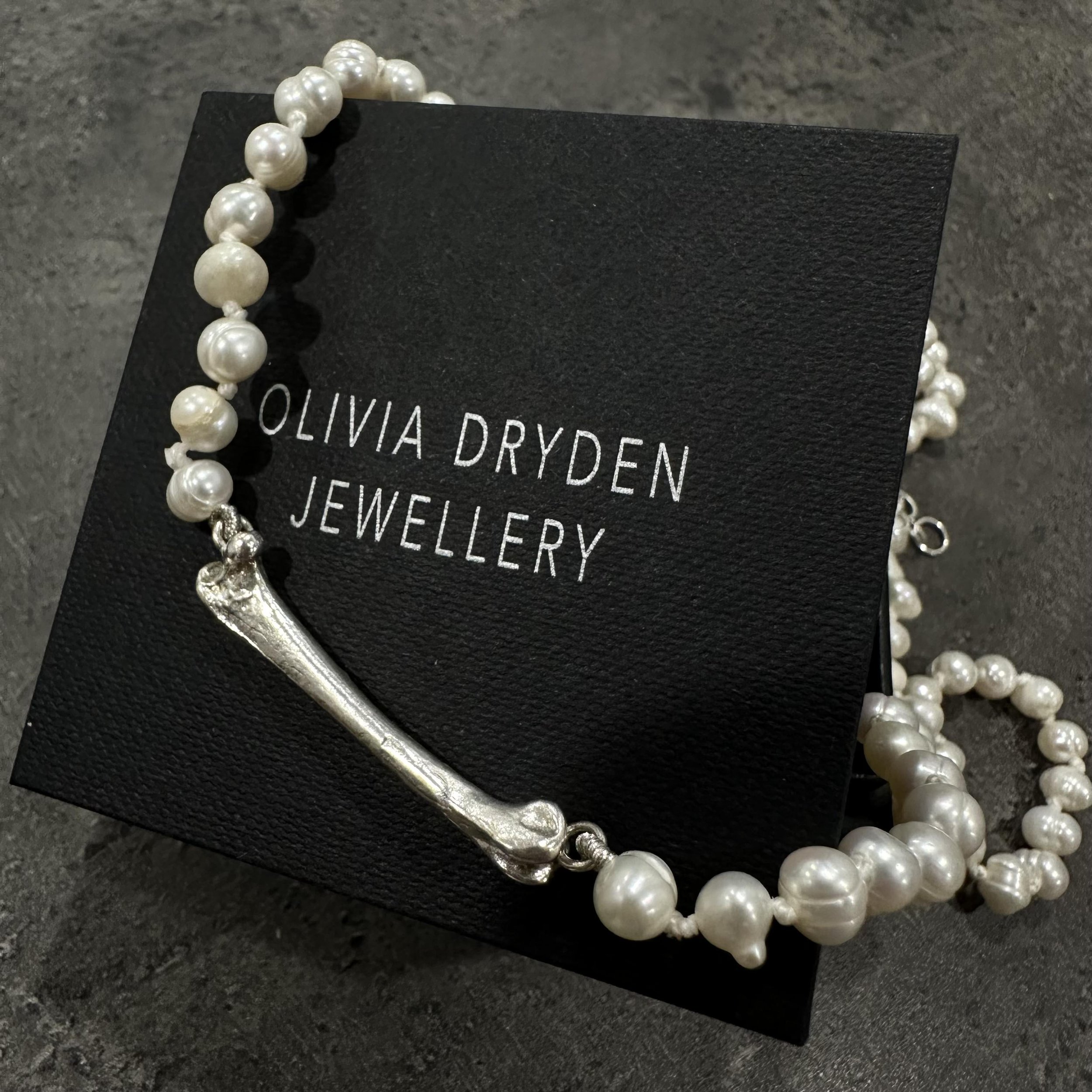
The Bone & Pearl Necklace is a handcrafted sterling silver necklace made in Adelaide, South Australia by Olivia Dryden. It belongs to the Curios Collection, where natural history, memento mori symbolism and careful craftsmanship meet.
The design began with a real bird femur, chosen for its slender shape and delicate natural structure. Through the moulding and casting process, the bone form has been recreated in sterling silver, transforming the original specimen into a lasting wearable object.
Freshwater pearls add soft organic lustre to the silver bone form, creating a gentle contrast between delicacy and structure. The result is refined, intimate and connected to my ongoing interest in natural history, ethical specimen work, memory and preservation.
Materials: Sterling silver and freshwater pearls
Process: Each necklace is handmade in small quantities using traditional silversmithing and casting techniques. The original bird femur was carefully moulded before being cast in sterling silver. Slight differences in texture, finish and pearl character should be expected as part of the handmade process.
Dimensions: Necklace length: 40 cm, with 3 cm extension chain.
Bone form: 3.5 cm.
Custom chain lengths may be available on request.
Explore more: View the Curios Collection or browse more necklaces.
FAQ
Q1: Is the Bone & Pearl Necklace made from real bone?
A: The finished necklace is made from sterling silver, not bone. The design began with a real bird femur, which was carefully moulded so its slender form and natural surface detail could be preserved before being cast in sterling silver.
Q2: Will the freshwater pearls look exactly the same as the photo?
A: Freshwater pearls are natural materials, so each pearl may vary slightly in shape, surface and lustre. These subtle differences are part of the character of handmade jewellery made with natural materials.
Q3: Can I request a different chain length?
A: Yes. The necklace comes on a 40 cm sterling silver chain with a 3 cm extension chain, but you may contact me before ordering if you would like to request a specific length.

The Possum Femur with Freshwater Pearls Necklace is a handcrafted sterling silver necklace made in Adelaide, South Australia by Olivia Dryden. It belongs to the Curios Collection, where natural history, memento mori symbolism and careful craftsmanship meet.
The design began with a real possum femur, chosen for its elongated form and quiet sculptural strength. Through the moulding and casting process, the bone has been recreated in sterling silver, transforming the original specimen into a lasting wearable object.
Freshwater pearls soften the silver femur form, adding gentle lustre and organic contrast. The result is refined, unusual and connected to my ongoing interest in natural history, ethical specimen work, memory and preservation.
Materials: Sterling silver and freshwater pearls
Process: Each necklace is handmade in small quantities using traditional silversmithing and casting techniques. The original possum femur was carefully moulded before being cast in sterling silver. Slight differences in texture, finish and pearl character should be expected as part of the handmade process.
Dimensions: Necklace length: 44 cm, with 5 cm extension chain. Bone form: 7.5 cm.
Explore more: View the Curios Collection or browse more necklaces.
FAQ
Q1: Will the freshwater pearls look exactly the same as the photo?
A: Freshwater pearls are natural materials, so each pearl may vary slightly in shape, surface and lustre. These subtle differences are part of the character of handmade jewellery made with natural materials.
Q2: How do I clean the Seahorse with Pearl Pendant ?
A: Avoid perfumes, lotions and harsh chemicals, and gently polish the sterling silver with a soft jewellery cloth. Because the pendant includes freshwater pearls, do not place the pearls or stone in silver dip. A silver dip may be used occasionally on the sterling silver components only, following the product instructions carefully before rinsing and drying completely.
Q3: Are the animal specimens ethically sourced?
A: Yes. Animal specimens used in Olivia Dryden Jewellery are sourced from animals that have passed from unpreventable causes, and each piece is created with respect for the original specimen.

The Magpie Skull & Amethyst Necklace is a handcrafted sterling silver necklace made in Adelaide, South Australia by Olivia Dryden. It belongs to the Curios Collection, where natural history, memento mori symbolism and careful craftsmanship meet.
The design centres on a magpie skull form, recreated in sterling silver as a quiet study of structure, memory and natural beauty. Paired with amethyst, the necklace brings a gentle violet tone to the sculptural silver skull, softening its gothic symbolism with colour, light and mineral variation.
This necklace is a one-off piece, made as a singular work rather than a repeatable design. The specific combination of magpie skull, amethyst, freshwater pearls and chain details is unique to this necklace.
The result is a distinctive piece of memento mori jewellery: refined, slightly gothic and connected to my ongoing interest in natural history, ethical specimen work and preservation.
Materials: Sterling silver and amethyst
Process: Each necklace is handmade in small quantities using traditional silversmithing and casting techniques. Slight differences in texture, finish, pearl and gemstone character should be expected as part of the handmade process.
Dimensions: Necklace length: 42 cm, with 3 cm extension chain.
Magpie skull: 5 cm.
Explore more: View the Curios Collection or browse more necklaces.
FAQ
Q1: Is the Magpie Skull & Amethyst Necklace made from a real skull?
A: The finished necklace is made from sterling silver, not bone. The design began with a real magpie skull, which was carefully moulded so its natural structure, beak form and surface detail could be preserved. That mould was then used to cast the skull in sterling silver, creating a lasting metal version of the original specimen.
Q2: Are the animal specimens ethically sourced?
A: Yes. Animal specimens used in Olivia Dryden Jewellery are sourced from animals that have passed from unpreventable causes, and each piece is created with respect for the original specimen.
Q3: Are the Magpie Skull & Amethyst Necklace suitable as a gift?
A: Yes. Each piece is packaged in an Olivia Dryden Jewellery branded box or velvet bag and is suited to collectors who appreciate handmade jewellery with story, natural detail and quiet symbolism.
FAQ
What is mourning jewellery?
Mourning jewellery is jewellery created or worn to remember someone, symbolise grief, or hold a connection to memory and loss.
Is mourning jewellery the same as memento mori jewellery?
They overlap, but they are not identical. Mourning jewellery often relates to remembrance of a specific person, while memento mori jewellery is a broader reminder of mortality.
Is mourning jewellery still worn today?
Yes. Many contemporary jewellery collectors are drawn to symbolic jewellery that explores memory, mortality, grief and personal meaning.
Does Olivia Dryden make mourning jewellery?
Olivia Dryden creates contemporary memento mori and Curios jewellery inspired by memory, mortality, natural history and ethically sourced bone forms.
Written by Olivia Dryden
Olivia Dryden is an Adelaide-based contemporary jeweller creating handcrafted sterling silver jewellery inspired by botanical specimens, ocean treasures, natural history and memento mori traditions. She holds a Bachelor of Visual Arts and Design and was awarded a Helpmann Academy Fellowship, which enabled specialist taxidermy studies in London. Her work has been exhibited throughout Australia and is stocked by selected galleries and retailers.
